Mostrando entradas con la etiqueta voice acting. Mostrar todas las entradas

viernes, 28 de octubre de 2022

Lupin III Part 6 - Here comes the Italian dub

Lupin III's sixth series finally comes to Italian television! Lupin III Part 6 aired in Japan for the first time in October 2021 on broadcasting channel NTV, then it was dubbed in English and broadcasted on American programming block Toonami in April 2022 and available at the same time on the streaming platform HIDIVE. Regarding the Italian market Yamato Video, that usually takes care of dubbing the movies and the distribution of home video releases, worked on the official Italian subtitles for the simulcast release on the streaming platform Amazon Prime Video. This way, the Italian audience could watch the series at the same time as the Japanese broadcast. A year later, television company Mediaset (here we briefly talked about its history and collaboration with other European broadcasters) announced the release of the new series starting from October 12. The series, presented with the title “Lupin III - Una storia senza fine” (Lupin III - A neverending story), will air every Wednesday night in groups of five episodes each, covering 24 episodes in the span or a bit more than a month. With the release of the series’ promotional video, the fans noticed a detail not yet mentioned: almost all the voice actors were replaced.

Promotional video for the premiere on channel Italia 2

When a franchise runs for so long changing voice actors through the decades is a common event, but usually it’s a decision debated between the interested parties, and it aims at keeping vocal continuity as much as possible. The most frequent reasons are the actor’s retirement or passing. In this case, the most probable reason is that choosing a voice acting cast based in the Milan area is more convenient logistically for Mediaset than still working with the cast based in Rome (as Yamato Video prefers to do).

Promotional video for the Italian release of "Lupin III-The First"

In order to celebrate this phase of Lupin history in Italy, let’s remember the actors that voiced the gang in the past series.

Lupin III

Roberto del Giudice (1979-2007)

  • Part 1 (first and second dub), Part 2, Part 3
  • Tv specials since the first (Bye Bye Lady Liberty) to the 15th (Angel Tactics)
  • Movies from the first (The mystery of Mamo) to the fifth (Dead or Alive) + the OVA movie (The plot of the Fuma clan) 

Stefano Onofri (2008-2021)

  • The woman called Mine Fujiko, second dub of Part 3 (2021), Part 4 y Part 5
  • He debuted as Lupin in the tv special “Seven Days Rhapsody” in 2008 by choice of Roberto del Giudice before his death, he kept dubbing the specials until the 27th (Prison of the past)
  • Movies from “Lupin The Third vs Detective Conan” until “Lupin III-The First”

Luigi Rosa (2022)

  • Part 6
  • Second dub for the home video release of “The Castle of Cagliostro” (1992)
Jigen Daisuke
Germano Longo (1979)
  • Primero doblaje de Parte 1
Sandro Pellegrino (1979-2012)
  • Second dub of Part 1 (1987), Part 2 y Part 3
  • Tv version of the first movie (The mystery of Mamo, 1979), movies from the third (Legend of the Gold of Babylon) until the fifth (Dead or Alive)
  • Tv specials from the first to the 15th + the OVA movie (The plot of the Fuma clan)
Alessandro Maria D’Errico (2014-presente)
  • The woman called Fujiko Mine, second dub of Part 3 (2021), Part 4, Part 5 y Part 6
  • Tv specials from the 22nd (Lupin III: Blood seal - Eternal Mermaid) onwards
  • Movies from “Lupin The Third vs Detective Conan” until “Lupin III-The First”
Goemon Ishikawa
Enzo Consoli (1979)
  • First dub of Part 1
  • Vittorio Guerrieri (1987)
  • Second dub of Part 1 (1987), Part 3, second dub of Part 3 (2021)
  • Tv version of the first movie (The mystery of Mamo, 1979) and third (Legend of the Gold of Babylon)
Massimo Rossi (1982)
  • Part 2
Antonio Palumbo (1996-2021)
  • The woman called Fujiko Mine, Part 4, Part 5
  • Tv specials from the first (Bye Bye Lady Liberty) to the 27th (Prison of the Past)
  • Movies from “Farewell to Nostradamus” until “Lupin III-The First” + the OVA movie (The plot of the Fuma clan)
Patrizio Prata (2022)
  • Part 6
Fujiko Mine
Piera Vidale (1979-1982)
  • First dub of Part 1, Part 2
  • Theatrical release of “The mystery of Mamo” (1979)
Alessandra Korompay (1987-2021)
  • Second dub of Part 1 (1987), Part 3, second dub of Part 3 (2021), Part 4 y Part 5
  • The woman called Fujiko Mine
  • Tv special from the first (Bye Bye Lady Liberty) until the 27th (Prison of the Past)
  • Movies from the tv version of the first one (The mystery of Mamo, 1987) until “Lupin III-The First” + the OVA movie (The plot of the Fuma clan)
Emanuela Pacotto (2022)
  • Part 6
Koichi Zenigata
Enzo Consoli (1979-1992)
  • First (1979) and second dub of Part 1 (1987), Part 3
  • Tv version of the first movie (The mystery of Mamo) and third movie (Legend of the gold of Babylon) + the OVA movie (The plot of the Fuma clan)
  • First tv special (Bye Bye Lady Liberty) and home video release of “Crisis in Tokyo” (2002)
  • His recordings were kept for the second dub of Part 3 (2021), that took place after his death in 2007
Marcello Prando (1982)
  • Part 2
Rodolfo Baldini (años 90)
  • Tv specials number 2 (The Hemingway Papers), 3 (Napoleon's Dictionary)  and 4 (From Siberia with love)
Rodolfo Bianchi (1996-2021)
  • The woman called Fujiko Mine, Part 4, Part 5
  • Tv specials from the 5th (Voyage to danger) until the 27th (Prison of the Past)
  • Movies from “Farewell to Nostradamus” until “Lupin III-The First”
Mario Zucca (2022)
  • Part 6
Lupin III Part 6 promotional video with Luigi Rosa

After two Wednesdays of broadcast, there are interesting considerations about the Italian approach to the series. First of all, the broadcasting of five episodes in a row every Wednesday night in prime time initially seemed odd, as if it was a way to complete the release as soon as possible, but now everything is clearer. Wednesday night has been for a very long time the time slot dedicated to the Lupin movies and tv specials: the block of five episodes probably aims to keep the usual weekly programming. Furthermore, the episode order was slightly changed, shuffling the standalone episodes: this way the six chapters covering the arc “Lupin III vs Sherlock Holmes” were aired with no interruption by the single stories, replicating the feeling of watching a movie (five episodes plus the the end of the arc the following week). This shows an interesting broadcast strategy created for the audience’s ideal enjoyment of the series. 

Regarding the translation and adaptation, to this day it seems that the dialogues stayed accurate to the original version, differently from the previous series, in which dialogues about death and murders were “softened”, part of a character’s history was changed (kidnapped for a ransom, when in reality the poor girl was exploited for pornografic pictures) and any mention of one of the supporting characters’ homosexuality was omitted.

Finally, the new voice acting cast proposes a convincing interpretation of the characters, hugely contributing to the pleasant vision experience. Personally it wouldn’t be a bad idea if the new cast kept dubbing the eventual future series and the “classic” cast kept dubbing the movies for Yamato Video. In any case, we will see soon what they will decide when it comes to the movie Lupin III VS Cat’s Eye coming in 2023 on Amazon Prime Video. Until then, I wait with enthusiasm for next Wednesday for the continuation of the series!


viernes, 10 de diciembre de 2021

Popai: Popeye speaks Sardinian!

Recently, while looking for something to watch on tv at night, I found a peculiar show: one of the shorts of Popeye the sailor dubbed in Sardinian! It seems incredible but it’s true, in fact it’s a project of publisher NOR of Ghilarza founded by the contribution of the Autonomous Region of Sardinia. The episodes go on the air every Wednesday at 9:30 PM and every Friday at 9:00 PM on Telesardegna, regional Sardinian channel that can be found at number 13 of DTT (digital terrestrial television). 

Each episode presents the dubbed short film, accompanied by a commentary section about the history of the character and his comic strip of origin. For instance, the episode of Wednesday December 1st presents the 1938 short film Goonland, and the commentary by Antoni Ignàtziu Garau analyzes the racism and representation of foreign populations in the 1930s in America, offering the context needed to watch the short films of this era with a critical eye and the awareness that these are products of the society of their time.

Antoni Ignàtziu Garau in the documentary part of the episodes

Popeye the sailor, created by Elzie Crisler Segar, debuted in 1929 in the comic strip Thimble Theatre, which later was renamed after the protagonist. The character was present in daily strips and Sunday pages, soon getting quite popular: in 1933 Fleischer Studios (which we already talked about regarding the rotoscope technique) produced a series of animated theatrical short films called Popeye the Sailor. In 1941 distributor Paramount took control of the studio, changing the name to Famous Studio, continuing the production without the Fleischer brothers. The short films were still being produced until 1956, accounting for a total of 231 short films that were later broadcasted on television for decades.

Popeye's very first appearance in Thimble Theatre (1929)
(source: popeye.com)

The series narrates the adventures of Popeye the sailor, who faces the villain (usually the bully Bluto) to help his beloved Olivia Oyl. The most memorable elements are the funny fight scenes that follow the logic of slapstick physics (we talked about it in the past regarding Pink Rabbit), Popeye’s music theme and the use of spinach that gives the sailor a mighty physical strength. The creativity of the gags’ visual representation and the fun personality of Popeye assured the series’ success. Later on King Features Syndicate produced an animated series for television in 1960, while Hanna Barbera (still on behalf of King Features Syndicate) produced The All New Popeye Hour from 1978 to 1983 and Popeye and Son in 1987.

The program’s filming, directing, post-production are by Gabriele Cossu and Nicoal Porru, with opening sequence by Kevin Lai and Bruno Olivieri, music by Emanuele Garau and Piero Collu, and finally the production manager is Francesco Cheratzu. We already know Bruno olivieri and Francesco Cheratzu for their participation in Sardegna Film Commission’s project of animated short films in Sardinian language, respectively as storyboard artist and writer of the short film “28 abrile 1794: sa die de sa Sardinia”, of which we already have a trailer.

NOR, a digital publisher since 2010 founded by Francesco Cheratzu, publishes in ebook and physical format novels, essays and studies dedicated to Sardinia in several languages other than Italian, such as French and Spanish. Its series Le Grazie gathers the works of Nobel Prize Sardinian writer Grazia Deledda in its original language and in several high level translations.

The publisher collaborated with association Tramudadas from the town of Pabillonis for the dubbing of 22 Popeye short films, here you can consult the list of all the material used in the episodes. The voice actors are: Maurizio Foddi (Popeye and Pappy); Eleonora Chinghine and Veronica Obinu (Olivia); Piero Obinu (Bluto); Sebastian Foddi (Swee’ Pea). 

This is a surprising and very welcomed initiative that promotes the learning of the Sardinian language and the appreciation for one of the most known animated characters and his history. Projects of this kind deserve to be supported and encouraged, and I hope to see more of them in the future.

lunes, 5 de abril de 2021

TOTTOI - A lost anime set in Sardinia now found again!

Once again Youtube recommended videos led me to a surprising discovery: a short promo for an animated Japanese tv movie whose setting felt oddly familiar, and the characters were having pane carasau for dinner! “Could it be? A Japanese animated movie set in Sardinia?” Yes, it could!

Tottoi is a movie produced in 1992, based on a 1980 novel with the same name by Gianni Padoan. Using a novel as source material wasn’t unusual for anime productions, with the creation of a subgenre of Japanese animation due to the World Masterpiece Theater: a collection of animated series produced annually from 1975 to 1997 and from 2007 and 2009. Even the 1974 series Heidi girl of the Alps, one of Hayao Miyazaki’s first animated works, is based on a Swiss novel! This was a very successful trend at the time, so in retrospect it’s not surprising that Tottoi was adapted into an animated movie. What is surprising though is that, despite Italy’s flourishing love for anime and the very frequent import of series for our country’s television, this movie never got an Italian release. Ironically, it has an English and Spanish official release but it’s relatively unknown in the country of its source material.

The book that inspired the movie was born from the pen of writer and ethologist Gianni Padoan in 1980. He wrote more than a hundred novels known world wide and translated in several languages, winning numerous awards for his works. As an ethologist he studied the behaviour of wolves, meanwhile he had been writer of several television and radio shows, and worked with a few magazines specialized in history.

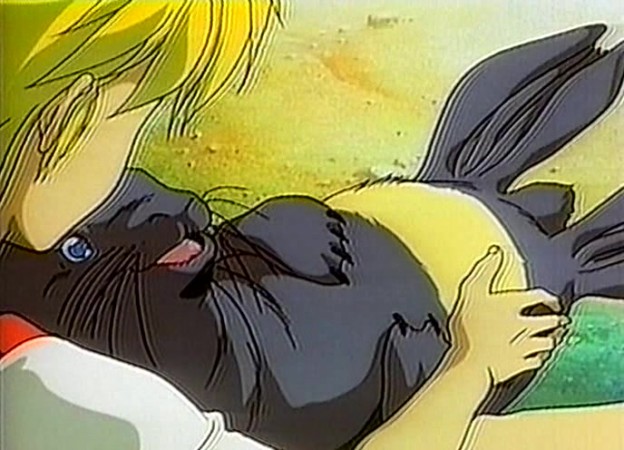
The film accurately follows the narration of the book: in the 1970s Antonio (Tottoi), a 14 year old kid, lives with his family in Germany. After his mother’s death, his father decides to go back to his native town in Sardinia to raise his two children in a healthier environment. So Tottoi and his little sister discover Dorgali and the maritime village Calagonone. During an exploration of the caves of Bue Marino, Tottoi finds a Mediterrean monk seal. This animal was believed to be extinct, but this specimen came back to the cave to give birth to a seal pup on a beach inside the cave. Accompanied by a local naturalist, Tottoi manages to befriend the seals, calling the newborn Zabaione (Eggnog) due to a yellow spot on the belly. Through the course of the film Tottoi and his friends defend the seals from an American business man that wants to capture them for his zoo in Florida.

A Mediterrean monk seal


The seal Zabaione in the film


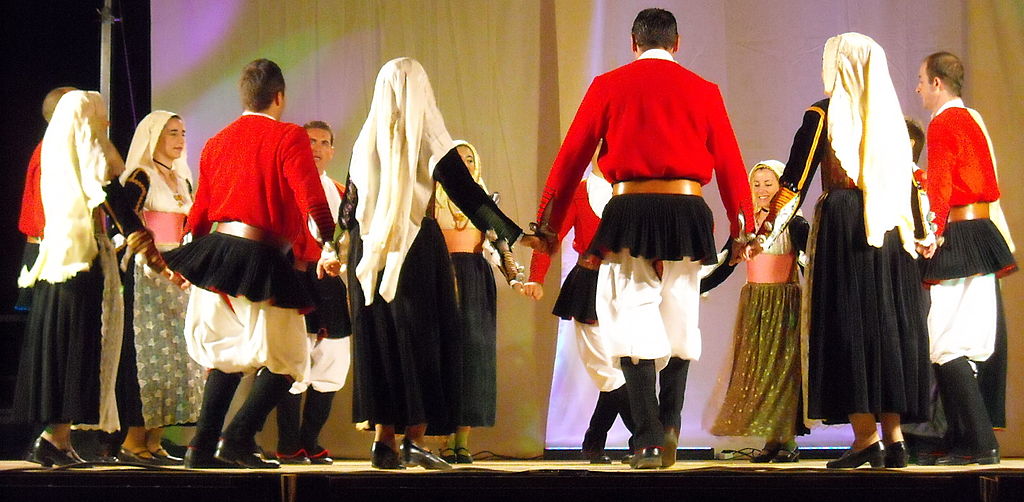
The film keeps the book’s message of protection and preservation of the environment, representing very accurately the Sardinian landscapes and traditions such as su ballu tundu, a traditional dance that has numerous variants of choreography according to the specific area of Sardinia, but they all have in common the fact of dancing in group in a circle. 

Picture of folk group Ittiri Caneddu shared by Cristiano Cani

The film was produced by Nippon Animation, the same studio that produced the World Masterpiece Theater mentioned earlier, and it aired in 1992 on the television channel NHK. The feature film was dubbed and aired in English and Spanish respectively with the titles The secret of the seal and El secreto de la foca. The film has been unknown in Italy until 2012, when the project of a class from the middle school of Dorgali provided an Italian dub. The students lent their voices and the result is a peculiar Italian version that includes expressions in Sardinian. The film was presented on March 17th 2012 at the municipal theater of Dorgali during the film festival Cinema Musica Ambiente Società organized by the municipality with the participation of the Department of Culture of Region Saridinia.

It’s a shame that an official dub doesn’t exist, but the project by Dorgali’s middle school is a very admirable initiative that finally allowed this film to be known in the country of origin of its story. 

Here is the full movie dubbed in English, enjoy!


viernes, 26 de febrero de 2021

Update: a trailer for Faulas!

So on Michela Atzeni's account I found a trailer for the short film we talked about earlier! It seems the title of the product changed from Faulas si credia to simply Faulas.


We can see the stop-motion animation uses characters created with paper puppets, with an aesthetic that resembles the illustrations of children’s books colored with markers. Personally I believed that this is a really good and charming effect.

In the credits, the names of the staff working with Michela Atzeni are different from the ones I previously presented, this is because that’s the final team for the short film. Michela Atzeni writes, directs and works on the animation, Giulia Pes takes care of the storyboard (which is planning the movements of the characters), while the character design is by Marina Brunetti.

The narrator’s voice will be Lia Careddu, with music by Simone Mura, photography of Federica Ortu and color grading by Damiano Picciau, under the organization of Laura Biagini and Mommotty’s executive production. One can speculate that the people previously involved in the team are working on another project for Mommotty.

Stay tuned for more news and trivias about the world of animation!

sábado, 6 de febrero de 2021

The Sardegna Film Commission short films - Fourth: anthropology, tradition and art

After “history, archaeology and legends of Sardinia”, “flora and fauna” and “distinguished Sardinian characters”, the fourth chapter of the miniseries that analyzes the Sardegna Film Commission animated short films features the theme of “anthropology, tradition and art”, represented by “Faulas si credia”.

Theme: anthropology, tradition and art

This short film is a collection of sayings of the popular tradition, of stereotypes and expressions contextualized through rhymes that explain their meaning, in the form of fables. 

Produced by Mommotty, the short film will be directed, written and animated by Michela Anedda, with the music of Emanuele Contis and the voice of Michela Atzeni. The animation technique will be one of my favorites, stop-motion. This type of animation consists in simulating the movement of static objects through a series of still images in succession. With this technique you can create animated movement of any object by taking sequential pictures. The possibilities are infinite: toys, articulated dolls, clay, sand, paper cutouts (as we saw in the case of the animated collage), and people as well! In the last case it’s a more specific technique called pixilation that uses the same principles with people instead of objects.

The stop-motion technique was also used for the special effects in famous films such as the first iteration of King Kong in 1933, the terrific effects of Beetlejuice (1988) and the formidable Gremlins in several scenes from the namesake features, alternating with the use of animatronic puppets. Famous examples of stop-motion animation are: films by company Aardman animations such as Wallace y Gromit, Chicken Run, Shaun the Sheep Movie; Coraline, Kubo and the Two Strings and ParaNorman by Studio Laika; and finally the Swiss-British series Pingu.

One of the most known examples of stop-motion in Italy is the series Mio and Mao by studio Misseri, charming product animated with claymation starring two curious kittens that explore their colorful world. The same studio produced in collaboration with NHK a series, Pozzie, animated using real droplets of water to create moving figures, with a new technique! Personally I believe that studio Misseri deserves an article on its own devoted to its products, it might happen in the future!

Mio and Mao from studio Misseri's page 

Pozzie from studio Misseri's page


Michela Anedda has a degree in Industrial Design at the University of Studies of Sassari and achieved a Master of Arts in animation at the Edinburgh College of Art with the production of short film Cogas: selected for numerous national and international film festivals, it won Best Italian Animation at Sardinia Film Festival. She participated in the university research project for the visual communication of Region Sardegna at Expo. As a freelancer she collaborates with Sardinian directors and directs animated short films: among them is “Sei tu il nostro eroe” for Sardegna Film Commission’s Heroes 20.20.20 project, selected at Brazilian festival Anim!Arte. Michela Anedda organizes stop-motion animation workshops as well for adults, young adults and kids.

Cogas from michela on Vimeo.

In several occasion her work was part of documentaries: in 2018 her stop-motion animation contributed to the narration of “L’Uomo con la Lanterna” directed by Francesca Lixi, that pieces together the life of her uncle as worker for the Italian Bank of China in the 1920s, thanks to pictures and recordings in 8mm film, and how discovering this past influenced the life of Francesca Lixi herself. 

What’s more, in 2019 she worked on the motion graphics of the short documentary “Ràixe - Spazi digitali per la cultura tabarchina”, produced by Ginko Film as multimedia content for the museum of Calasetta. The documentary narrates the fascinating history of the tabarchino people and their nomadic path through Mediterrean through the centuries.

Michela Atzeni is a theatre actress, performer and voice director. After her theatre training she studied acting at Teatro dei Filodrammatici of Milan and in 2014 she graduated at the School of Voice Acting at Centro O.D.S. of Turin, for which she did her first voice acting gigs. Since 2010 she has been collaborating with Sardegna Teatro in different theatre productions that tour at national level. She read numerous audiobooks for the platforms Storytel.it and Audible.com. She is chief of the company QUARANTACINQUE audiolibri e doppiaggio and is producer, reader and curator of audiobooks distributed nationwide and dubbing and voice over services. We can listen to her voice in an extract of the audiobook “Sentinella della pioggia” on Audible.com.

Emanuele Contis is a Sardinian musician and composer. After a short period as engineer, he discovered his real calling and studied further music, his passion, at Berklee College of Music in Valencia. A passion that he has since he played the saxophone at the age of 6, and that now is his job. He is the founder of INDÒRU - Boutique del suono, a creative studio for music and sound based in Sardinia: in INDÒRU he composes music for tv series, short films, advertisement, and the soundtrack for his first long film as well. You can listen to examples of his work on soundcloud and his personal website.

I adore stop-motion’s aesthetic, especially when clay is used, furthermore the saying and idioms fascinate me, because of this I believe it could become one of my favorite short films when it is released!

The next and last short film will be “La Rondine”, representing the theme of sustainability, climate change and quality of life, stay tuned!


lunes, 31 de agosto de 2020

If there's a will there's a way: prevention in the voice acting booth

Voice acting is one of the activities that kept going on at the beginning of quarantine in March, even though it was not an essential service. That is due to a bureaucracy issue: the working activities in Italy are labeled through ATECO classification codes, and while the movie productions are in category 59, voice acting is in 59.12. This labels it as “post cinematographic post-production of videos and television programs” essential activity.

Of course, dude to the nature of acting in the proximity of other actors, voice acting is not a safe activity during a pandemic. Voice actors decided on their own accord to interrupt the works until the end of national lockdown, which is the hardest phase of quarantine. While we had to still wait for several weeks before we could move freely, a famous voice acting studio, PUMAIS DUE, was already preparing to go back to work. 

Fiamma Izzo, one of the funding siblings of PUMAIS DUE and voice actress, explained in an interview the new rules to work in the studio.

“A crazy race against time, where nothing was left to chance, but every detail was carefully thought out: I even bought one of those machines - used in operating rooms - for ozonation and sanitization of environments. Then, obligatory masks: they’re given by us at every entrance, together with shoe covers and carpets; and still, special glass sheets to separate the staff. Every worker, the actors, the voice director - which is basically like a movie director - the sound engineer, they all have an individual space and there’s even a box that sanitizes the scripts used by the voice actors.”


As you can see in this video on the newspaper La Repubblica's website, all voice actors have to respect distances and have their own personal tools. What’s more, the scripts are sanitized using an UV light (ultraviolet light, used to identify fake money), and both the engineers and the actors are separated by the glass walls. Usually plexiglass is used but it has terrible sound qualities and you can’t risk ruining the recording.

Up to the day of the interview in May, the PUMAIS DUE studio resumed working on the dubbing of Grey’s Anatomy and a few Amazon products, among many other productions.