Mostrando entradas con la etiqueta cartoons. Mostrar todas las entradas

viernes, 20 de febrero de 2026

From the seagull to Garibaldi: the history of Lanterna Magica


One the most known and appreciated animated movies of the end of last century is La gabbianella e il gatto (Lucky and Zorba), part of the collective memory of many Italian children in the 90s. Here we are going to find out about the interesting history of its animation studio, Lanterna Magica.

Created in 1983 by Maria Fares and Roberto Baratta, it was initially a creative lab sponsored by the Department of Education of the Municipality of Turin. In its first years of activity, on one hand it created cartoons with kids of primary and secondary schools, and on the other it realized short films and commercials with social themes (alcohol, smoking, pollution and others) for companies and institutions. Furthermore, the lab operated as a center for audiovisual culture, with literacy courses and specialization in audiovisual techniques for teachers, cultural operators and citizens.

In 1992, the studio decided to try out the production of its first animated feature, La freccia azzurra, based on the Gianni Rodari's 1964 short story of the same name. The film was directed by the artist Enzo D'Alò, a very important character for the history of the studio, and it featured a team of  famous voice actors such as Dario Fo and Lella Costa. The production was complex and a real investment, which paid off very well when it came out in theaters in 1996, with great success from critics and audience, leading to winning four different film awards: David di Donatello 1997 (best musician to Paolo Conte), Nastro d'Argento 1997 (best soundtrack to Paolo Conte), special award for an animated movie produced in Italy, Bellaria Film Festival 1997 (Premio Casa Rossa for best technical contribution) and a nomination to the International Animated Film Festival of Annecy 1997 as best feature film. During the production of La freccia azzurra, the studio worked as well on tv productions such as the feature Kamillo Kromo (1993) and the series La Pimpa – Le nuove avvventure (1997).

 
Trailer of the restored version (2020) of La Freccia Azzurra

In 1998, La gabbianella e il gatto came out in cinemas with incredible success, managing to be the most popular and successful film by Enzo D'Alò and in general the Italian animated feature with the biggest commercial success. Based on the 1996 novel "The Story of a Seagull and the Cat Who Taught Her to Fly" by the Chilean author Luis Sepúlveda, the film was proof of the incredible potential of the studio, that seemed to have a future of expansion. Among other tv productions, in 1999 Lanterna Magica worked on the opening titles of the kids show Melevisione

In that year, Maria Fares and Enzo D'Alò (she was chief executive, he was movie director), invested heavily in projects, tools and workers in order to expand the company. They had the goal of producing a feature film every year and a tv series every two years, respecting the commissions. The ongoing productions were the feature films Momo, Tempesta, Aida (degli alberi), the tv series Sopra i tetti di Venezia and the pilot for Pinocchio. At the end of the year, Lanterna Magica was approaching a deal with important companies in the field that would have let it gain more creative autonomy and the management of all the rights of its productions and collateral products.

The new millennium began with a complicated year. Thanks to a union statement from that time, we have a timeline of the events that led to the bankruptcy of Lanterna Magica as a company. This is not the end of the studio, but it is a very important transitional moment that defined its future. In January 2000, Enzo D’Alò began realizing something about what he wanted to do with his art. He insisted that the company had to stay exclusively an executive producer. The statement claims as such:

Clearly D'Alò doesn't manage to realize a synthesis between being a director and a producer at the same time and he's afraid of not being able to "control" a rapidly growing company anymore.

These thoughts from D'Alò resulted in lost opportunities and delays in the production of Momo and Pinocchio. Similar problems manifested with Sopra i tetti di Venezia, but thanks to the willingness of the other directors of the series, the studio maintained the contract with France Animation until the month of August, when the French company, worried about the repercussions of the internal conflict between D'Alò and the Lanterna Magica workers, rescinded the contract. After months of attempts at mediation by the workers and constant refusals of negotiation by D'Alò, on June 20th 2000 he assumed the bankruptcy of the company with a testimony at the Bankruptcy Court of Turin. This means that he declared his company could fail very soon, despite the efforts of Maria Fares. Due to the official pre-bankruptcy situation, the company could not pay its debts with the firms that collaborated with it for Momo and Sopra i tetti di Venezia, leading to the already mentioned conclusion of the contract by France Animation.

Finally, Lantena Magica failed around the end of the year, however the film production company Medusa acquired it in December 2000, allowing the conclusion of the ongoing projects and hiring back almost all the workers. Two years later, Maria Fares managed to buy back the company from Medusa, which only kept the role of film distributor. This way, Lanterna Magica continued producing films and tv series for many years.

 
Commercial for the Aida degli alberi VHS and its merchandise by Kinder & Ferrero (2003) 

Aida degli alberi came out in theatres in 2001. The work, inspired by Giuseppe Verdi's lyrical opera, was less successful than the seagull film, but still very appreciated. In the same year, Sopra i tetti di Venezia completed its production and debuted on European television among with Rai 2 in 2003, while the feature film Totò Sapore e la magica storia della pizza came out in theatres. Aida and Totò had merchandise in collaboration with Kinder & Ferrero. The golden age of the Kinder & Ferrero toys is a phenomenon that deserves its own article.

 
Trailer of Totò Sapore (2003) 

In the following years they worked on tv series such as Gino il pollo (2006) and Matt & Manson (2008, French co-production). In 2009, a new co-production with France resulted in the film Nat e il segreto di Eleonora. The following year, Maria Fares decided to close the historic headquarters of Lanterna Magica in Via Cesare Battisti 15 in Turin, with the plan of periodically renting spaces that were more convenient to the time and needs of the productions. The transfer led to the writing of the inventory of the archive of production documentation. The inventory is available online on the website of the State Archive of Turin. In 2011 Lanterna Magica produced the feature film for tv dedicated to the celebrations of the 150th anniversary of the unification of Italy: Il generale e i fratellini d'Italia.

Nowadays, Lanterna Magica keeps working in collaboration with other companies. The studio's website was available until fall of 2024, it's possible that they changed the domain or simply they did not bother keeping it up. In any case, the website has been archived in the Wayback Machine and can be still be visited.

viernes, 28 de octubre de 2022

Lupin III Part 6 - Here comes the Italian dub

Lupin III's sixth series finally comes to Italian television! Lupin III Part 6 aired in Japan for the first time in October 2021 on broadcasting channel NTV, then it was dubbed in English and broadcasted on American programming block Toonami in April 2022 and available at the same time on the streaming platform HIDIVE. Regarding the Italian market Yamato Video, that usually takes care of dubbing the movies and the distribution of home video releases, worked on the official Italian subtitles for the simulcast release on the streaming platform Amazon Prime Video. This way, the Italian audience could watch the series at the same time as the Japanese broadcast. A year later, television company Mediaset (here we briefly talked about its history and collaboration with other European broadcasters) announced the release of the new series starting from October 12. The series, presented with the title “Lupin III - Una storia senza fine” (Lupin III - A neverending story), will air every Wednesday night in groups of five episodes each, covering 24 episodes in the span or a bit more than a month. With the release of the series’ promotional video, the fans noticed a detail not yet mentioned: almost all the voice actors were replaced.

Promotional video for the premiere on channel Italia 2

When a franchise runs for so long changing voice actors through the decades is a common event, but usually it’s a decision debated between the interested parties, and it aims at keeping vocal continuity as much as possible. The most frequent reasons are the actor’s retirement or passing. In this case, the most probable reason is that choosing a voice acting cast based in the Milan area is more convenient logistically for Mediaset than still working with the cast based in Rome (as Yamato Video prefers to do).

Promotional video for the Italian release of "Lupin III-The First"

In order to celebrate this phase of Lupin history in Italy, let’s remember the actors that voiced the gang in the past series.

Lupin III

Roberto del Giudice (1979-2007)

  • Part 1 (first and second dub), Part 2, Part 3
  • Tv specials since the first (Bye Bye Lady Liberty) to the 15th (Angel Tactics)
  • Movies from the first (The mystery of Mamo) to the fifth (Dead or Alive) + the OVA movie (The plot of the Fuma clan) 

Stefano Onofri (2008-2021)

  • The woman called Mine Fujiko, second dub of Part 3 (2021), Part 4 y Part 5
  • He debuted as Lupin in the tv special “Seven Days Rhapsody” in 2008 by choice of Roberto del Giudice before his death, he kept dubbing the specials until the 27th (Prison of the past)
  • Movies from “Lupin The Third vs Detective Conan” until “Lupin III-The First”

Luigi Rosa (2022)

  • Part 6
  • Second dub for the home video release of “The Castle of Cagliostro” (1992)
Jigen Daisuke
Germano Longo (1979)
  • Primero doblaje de Parte 1
Sandro Pellegrino (1979-2012)
  • Second dub of Part 1 (1987), Part 2 y Part 3
  • Tv version of the first movie (The mystery of Mamo, 1979), movies from the third (Legend of the Gold of Babylon) until the fifth (Dead or Alive)
  • Tv specials from the first to the 15th + the OVA movie (The plot of the Fuma clan)
Alessandro Maria D’Errico (2014-presente)
  • The woman called Fujiko Mine, second dub of Part 3 (2021), Part 4, Part 5 y Part 6
  • Tv specials from the 22nd (Lupin III: Blood seal - Eternal Mermaid) onwards
  • Movies from “Lupin The Third vs Detective Conan” until “Lupin III-The First”
Goemon Ishikawa
Enzo Consoli (1979)
  • First dub of Part 1
  • Vittorio Guerrieri (1987)
  • Second dub of Part 1 (1987), Part 3, second dub of Part 3 (2021)
  • Tv version of the first movie (The mystery of Mamo, 1979) and third (Legend of the Gold of Babylon)
Massimo Rossi (1982)
  • Part 2
Antonio Palumbo (1996-2021)
  • The woman called Fujiko Mine, Part 4, Part 5
  • Tv specials from the first (Bye Bye Lady Liberty) to the 27th (Prison of the Past)
  • Movies from “Farewell to Nostradamus” until “Lupin III-The First” + the OVA movie (The plot of the Fuma clan)
Patrizio Prata (2022)
  • Part 6
Fujiko Mine
Piera Vidale (1979-1982)
  • First dub of Part 1, Part 2
  • Theatrical release of “The mystery of Mamo” (1979)
Alessandra Korompay (1987-2021)
  • Second dub of Part 1 (1987), Part 3, second dub of Part 3 (2021), Part 4 y Part 5
  • The woman called Fujiko Mine
  • Tv special from the first (Bye Bye Lady Liberty) until the 27th (Prison of the Past)
  • Movies from the tv version of the first one (The mystery of Mamo, 1987) until “Lupin III-The First” + the OVA movie (The plot of the Fuma clan)
Emanuela Pacotto (2022)
  • Part 6
Koichi Zenigata
Enzo Consoli (1979-1992)
  • First (1979) and second dub of Part 1 (1987), Part 3
  • Tv version of the first movie (The mystery of Mamo) and third movie (Legend of the gold of Babylon) + the OVA movie (The plot of the Fuma clan)
  • First tv special (Bye Bye Lady Liberty) and home video release of “Crisis in Tokyo” (2002)
  • His recordings were kept for the second dub of Part 3 (2021), that took place after his death in 2007
Marcello Prando (1982)
  • Part 2
Rodolfo Baldini (años 90)
  • Tv specials number 2 (The Hemingway Papers), 3 (Napoleon's Dictionary)  and 4 (From Siberia with love)
Rodolfo Bianchi (1996-2021)
  • The woman called Fujiko Mine, Part 4, Part 5
  • Tv specials from the 5th (Voyage to danger) until the 27th (Prison of the Past)
  • Movies from “Farewell to Nostradamus” until “Lupin III-The First”
Mario Zucca (2022)
  • Part 6
Lupin III Part 6 promotional video with Luigi Rosa

After two Wednesdays of broadcast, there are interesting considerations about the Italian approach to the series. First of all, the broadcasting of five episodes in a row every Wednesday night in prime time initially seemed odd, as if it was a way to complete the release as soon as possible, but now everything is clearer. Wednesday night has been for a very long time the time slot dedicated to the Lupin movies and tv specials: the block of five episodes probably aims to keep the usual weekly programming. Furthermore, the episode order was slightly changed, shuffling the standalone episodes: this way the six chapters covering the arc “Lupin III vs Sherlock Holmes” were aired with no interruption by the single stories, replicating the feeling of watching a movie (five episodes plus the the end of the arc the following week). This shows an interesting broadcast strategy created for the audience’s ideal enjoyment of the series. 

Regarding the translation and adaptation, to this day it seems that the dialogues stayed accurate to the original version, differently from the previous series, in which dialogues about death and murders were “softened”, part of a character’s history was changed (kidnapped for a ransom, when in reality the poor girl was exploited for pornografic pictures) and any mention of one of the supporting characters’ homosexuality was omitted.

Finally, the new voice acting cast proposes a convincing interpretation of the characters, hugely contributing to the pleasant vision experience. Personally it wouldn’t be a bad idea if the new cast kept dubbing the eventual future series and the “classic” cast kept dubbing the movies for Yamato Video. In any case, we will see soon what they will decide when it comes to the movie Lupin III VS Cat’s Eye coming in 2023 on Amazon Prime Video. Until then, I wait with enthusiasm for next Wednesday for the continuation of the series!


viernes, 13 de agosto de 2021

Cartoons meet horror: I conigli rosa uccidono (Dylan Dog)

Eddie Valiant and Roger Rabbit

Comedy cartoons are well known for their own laws of physics that let the characters do comically exaggerated actions without any important injuries: this concept is called slapstick comedy. The most famous examples of slapstick can be found in the Looney Toons, Tom & Jerry and Popeye the sailor man short films. 

And this is only a part of the cameos!
What would happen if cartoon characters coexisted with humans? In 1988 the film Who framed Roger Rabbit, directed by Robert Zemeckis and starring Bob Hoskins, Christopher Lloyd and Charles Fleischer, proposes a world where humans and toons live together: they act in their short films like the human actors, but they still follow the slapstick rules. This incredible cult movie from the late 80s was created with a mixed technique: they filmed the live action scenes, then the animators added the toons, creating the interactions on screen between the two. The film is full of cameos of very famous characters, and one of the few occasions in which the biggest Disney and Warner Bros characters meet.

Cover for Dylan Dog n.24

A few months later in the same year, in Italy another answer to the question was given from a horror angle: Dylan Dog (we talked about the comic in the past) proposed in the newsstands issue 24 titled I conigli rosa uccidono (Pink rabbits kill), written by Luigi Mignacco with art by Luigi Piccatto and Cesare Valeri. The protagonist creature is the very famous animated bunny Pink Rabbit, homage and parody of Looney Toons and the slapstick principles. Pink Rabbit is presented as a fictional character in the world of Dylan Dog, produced by the Sandy Sidney studio (obvious parody of Disney). Incredibly, Pink Rabbit arrives in the real world, and tries to play with his new "meat friends" in the same way as in his native world: violent slapstick gags! Unfortunately humans don't follow the same laws of physics as toons do, so you can imagine the brutal and splatter results of his games, and his perplexities: why do his new friends not recover, are they fragile? 

Pink Rabbit finished playing
with his animator Frank
When the wife of one the main animators entrusts Dylan with the case of his murder (the husband used to have nightmare about Pink Rabbit and he recently saw him in real life), a series of events leads Dylan into Pink Rabbit's animated world. However, like with many other memorable stories of the character, the narration gives us two explanations, a supernatural one and a more worldly one, and one doesn't  exclude the other! Did Pink Rabbit really exist or was he a mask used by his creator to commit murders? In an incredible plot twist, both are true, when Groucho reveals to Dylan he saw his fight against Pink Rabbit on TV. The existence of the toon world is further tackled in issue 107, Il paese delle ombre colorate (The land of colored shadows) in 1995. Here is explored the animated world of Jumpo (Pink Rabbit's real name) and we understand that in reality the rabbit isn't so bad, he simply doesn't  understand the world of meat people.

Cover for Dylan Dog n.107

Jumpo got two other stories dedicated to him, in Dylan Dog's two secondary titles: in 2009 he stars in I conigli rosa colpiscono ancora (Pink rabbits strike again) in the annual Almanacco della Paura and in 2018 in I conigli rosa muoiono (Pink rabbits die) in the trimestral title Color Fest dedicated to stories in color. The tetralogy written by Luigi Mignacco gifted us with one of the most interesting and memorable characters of the series, and one of my favourites that I hope to see appear in other stories in the future.

lunes, 31 de mayo de 2021

Cartoon Digital 2021: continuing the collaboration with Nuova Animazione Sardegna

Previously we talked about the master on animation Cartoon Digital 2019, that took place in Cagliari, in the context of Nuova Animazione Sardegna. After skipping the date last year due to the pandemic situation, the master's 2021 edition took place entirely online from 26th to 28th of May. The first day featured a marathon of pitching and presentation of projects by Sardinian talents in collaboration with Rai Ragazzi and the national association of animation producers Cartoon Italia. Furthermore, the artistic director of the pitching event Cartoon SpringboardAgnès Bizzaro, presented the session "Coaching Programme for local young talents and students" with the goal of explaining how to perfect the techniques of pitching ideas for the international market. The session was dedicated to the formation of the young animators of Nuova Animazione Sardegna that completed the 2D animation course. 

Among the guests at the 2021 edition there are: 

  • Orion Ross & Shamik Majumdar (The Walt Disney Company EMEA - UK)
  • Lara Oliveti (Melazeta – IT)
  • Hélène Juguet (Ubisoft – FR)
  • Cristiana Buzzelli (Rainbow – IT)
  • Olivier Dumont (Entertainment One – UK)
  • Adina Pitt (Turner, a WarnerMedia Company – USA)
  • Audrey Brugère (CANAL+ – FR)
  • Carl Reed (Lion Forge Animation – USA)
  • Christopher Keenan (Mattel TV – USA)
  • Pietro Pinetti (Studio Bozzetto – IT)
On the occasion of the new edition, Sardegna Film Commission decided to celebrate the event by sharing parts of the 2019 sessions on its YouTube channel, allowing everyone to watch very interesting contributions from industry professionals such as Igort, Sandro Cleuzo and Marino Guarnieri. Currently the videos are in Italian, except for Sandro Cleuzo's that is in English, however they're full of visual demonstrations of the creative process and so you can still partially understand. On Cartoon Digital's Vimeo account parts of the current year contributions are available, such as Nevina Satta (CEO of Sardegna Film Commission) briefly explaining what Nuova Animazione Sardegna is.


I wish good luck and great success to all participants in the pitching session, I hope to hear about really good things about them!

Cartoon Digital - Nevina Satta - What is NAS? from CARTOON on Vimeo.

lunes, 17 de mayo de 2021

S'Ammutadori: le leggende sarde protagoniste del nuovo corto di Nuova Animazione Sardegna

Dopo più di un anno dalla formazione delle prime classi del laboratorio di Nuova Animazione Sardegna, iniziano a vedersi primi frutti con un nuovo corto interessante relativo alle leggende della Sardegna. 

"S'Ammutadori" è un corto animato di una decina di minuti prodotto da Flora's Room, piccolo studio d'animazione di Oristano. Il progetto è nato dall'idea della fondatrice dello studio Francesca Floris, sviluppata inizialmente durante il suo periodo di formazione al Centro Sperimentale di Cinematografia di Roma, durante il quale ha lavorato in diverse produzioni cinematografiche italiane. In seguito, durante il suo master in Antropologia Visiva all'Università di Siena ha lavorato nel campo dell'animazione e degli effetti speciali: Mission Impossible 7 di Paramount Pictures, 44 Gatti di Rainbow e L'Amica geniale 2 e The New Pope per HBO). Attualmente è disponibile un breve trailer sul canale YouTube di Flora’s Room che con il suo abile montaggio ci da un assaggio dell’estetica e atmosfera del cortometraggio animato. 

L'11 maggio la pagina Facebook di Flora’s Room ha annunciato la conclusione della produzione del cortometraggio, con una deliziosa foto raffigurante Francesca Floris e la figura de S’Ammutadori in posa per l’occasione. Sembra proprio il momento ideale per parlare di questo progetto!

Il cortometraggio ha come protagoniste due ragazze che mentre stanno dormendo vengono prese di mira da S’Ammutadori, il demone del sonno, e devono affrontare l’origine delle loro paure più profonde per sopraffare la creatura e vincere la lotta.

S’Ammutadori è una figura presente nelle leggende sarde da tempi antichi, si specula che la sua comparsa risalga al 241 a.C., dopo la discesa dei Romani in Sardegna in seguito alla sconfitta dei Cartaginesi, e conseguentemente la figura sarebbe una derivazione dalla figura romana dell’Incubo. Tuttavia testimonianze di una creatura che agisce durante il sonno opprimendo le persone, solitamente sedendosi sul torace, esistono ancora prima di questa data, pertanto l'origine non è certa. 

S’Ammutadori agisce sulle persone addormentate, togliendo il respiro con il suo peso, portando la vittima a svegliarsi. Diverse testimonianze riportano di aver avuto visioni spaventose una volta svegli, descrivendo la creatura nei modi più disparati, perciò non ha un aspetto specifico perché pare prendere la forma di ciò che ti terrorizza in particolare. Questa leggenda può aver avuto origine per dare un senso al fenomeno della paralisi del sonno (paralisi ipnagogica): la mente è sveglia ma il corpo è già in stato dormiente, si resta coscienti senza però riuscire a muoversi, causando talvolta allucinazioni dovute alla scarsità di ossigeno.

Nel cortometraggio, le due protagoniste dovranno affrontare S’Ammutadori in questo limbo tra sonno e veglia. La storia è tratta da un capitolo del racconto “L’ultimo amore di Las” scritto da Francesca Floris nel 2018. “L’ultimo amore di Las” è nato come una mostra che usa come filo conduttore una storia di dieci capitoli sull’amore tra due giovani donne in un universo dagli aspetti fantastici. Ogni capitolo ha un’illustrazione dedicata, accompagnata da una citazione del capitolo, seguita da una fotografia abbinata. Nel 2019 è stato pubblicato da Officina Libraria un libro sulla mostra sperimentale, contenente osservazioni e riflessioni, ma soprattutto tutte le illustrazioni, fotografie e il racconto integrale. Questa è la trama in breve tratta dal libro:

L’ultimo amore di Las racconta in prima persona la storia di una ragazza e dei suoi due desideri: quello di vivere liberamente la propria passione e di conquistare la donna dei suoi sogni. Las vive in un universo ucronico, su un pianeta chiamato Terra del Vero, dove l’anima è definita con il nome di Corpo Sacro e ha una sua propria anatomia, che viene curata con gli stessi criteri con cui viene medicato il fisico. Las vorrebbe diventare un’artigiana di Cicatrici d’Oro (l’equivalente delle protesi per il Corpo Fisico) ma non riesce a portare fino in fondo questa sua passione perché condizionata da un trauma vissuto nella sua infanzia, che non le permette di avere la predisposizione psicologica giusta a praticare un tale mestiere. Questo evento ha avuto un forte impatto anche sulla sua vita sentimentale, e sul modo in cui Las si avvicina alle persone che desidera conoscere.

Flora’s Room sta attualmente lavorando anche alla produzione di un lungometraggio che adatta l’intero racconto con il supporto della Sardegna Film Commission! Lo studio esperimenta unendo l’estetica dell’animazione 2D con la versatilità dell’animazione 3D.

L’animatore Fabrizio di Palma spiega il procedimento parlando del cortometraggio animato “Q”, ambientato durante la quarantena:

L’animazione 3D permette anche di avere l’abilità di muovere la telecamera in tempo reale nello spazio, cambiando facilmente l’angolo delle inquadrature e la lunghezza focale delle lenti virtuali. Permette anche di giocare con le luci in tempo reale e cambiare le luci molto rapidamente. Pertanto sblocca un approccio molto cinematografico con un nuovo potenziale.
Tuttavia l'approccio dell'animazione 2D lascia molto più spazio alla creatività, al design e allo stile, rendendo possibile adottare nuove estetiche distinte e caratteristiche. In “Q” perciò abbiamo combinato i due mondi per sfruttare il massimo potenziale di entrambi. Abbiamo creato una catena di lavoro e implementato alcune tecniche per ottenere la flessibilità del 3D, l'espressività del 2D e unirle in un nuovo linguaggio visivo. 
(Dal sito di Flora's Room)

Dal Press Kit del cortometraggio possiamo conoscere brevemente tutta la squadra di artisti che lavora alla produzione: 

Chiara Floris aka BLUEM - COMPOSER
Oristano, 1995
Chiara Floris è una cantante-cantautrice e produttrice. Si è trasferita a Londra nel 2014 per studiare musica. Lì ha iniziato a scrivere e produrre le proprie canzoni originali. Nel 2018 ha rilasciato in modo indipendente il suo EP di debutto: "Picolina". Ha passato i due anni successivi scrivendo un album nostalgico, questa volta in italiano, intitolato "NOTTE". In "NOTTE" combina versi personali e un suono oscuro a un lavoro visivo dedicato interamente al suo paese d'origine e la memoria delle sue nonne.
Laura Leitermann - EDITORE
Pisa, 1989 
Laura Leitermann lavora come assistente editor e editor. Dopo aver conseguito gli studi di scuola superiore a Lucca, dove è cresciuta, ha frequentato il corso di Fotografia al LABA a Firenze. Una volta laureata si è trasferita a Roma, dove si è specializzata in video editing, frequentando prima la NUCT e poi la CSC. Dopo aver completato gli studi, ha iniziato a lavorare come assistente editor in film e serie TV italiane, video musicali, e ha continuato a lavorare come editor in cortometraggi e documentari.
Beatrice Mele - SOUND DESIGNER
Nuoro, 1993
Beatrice Mele lavora come sound editor per il cinema. Una volta finiti i suoi studi di scuola superiore, si è trasferita a Pisa per frequentare l'università, nel corso di Discipline dello Spettacolo e della Comunicazione, laureandosi nel 2017. Una volta finito il suo corso universitario si è specializzato in Suono per il Cinema e la Televisione al Centro Sperimentale di Cinematografia a Roma, scegliendo di concentrarsi sul montaggio sonoro.
Lorenzo Consoli - ANIMATORE
Roma, 1995
Lorenzo Consoli è un animatore 2D e clean-up artist. Dopo aver completato gli studi di scuola superiore, ha frequentato il corso di animazione alla Scuola Internazionale di Comics, a Roma, dal 2015 al 2018. Si è specializzato in animazione cut-out alla stessa scuola nel 2019. Da allora sta lavorando a progetti di animazione indipendenti e progetti di infografiche, e come assistente professore insieme a Simone Filia, professore di animazione alla Scuola Internazionale di Comics.
Cyril Glerum - ANIMATORE
La Garenne-Colombes, 1996
Cyril Glerum lavora come animatore 2D e storyboard artist. Occasionalmente lavora anche come illustratore e fumettista, con attenzione particolare allo stile giapponese. Dopo aver ottenuto il doppio diploma italo-francese di scuola superiore a Roma, si è prima trasferito a Saint-Etienne, poi a Eindhoven, e poi a Padova, dove ha iniziato a frequentare la Scuola Interazionale di Comics. Ha finito i suoi studi nel settembre del 2018 nella sezione della scuola con sede a Roma, dove ora abita e lavora.
Alessandra Valle - BACKGROUND ARTIST
Imperia, 1997
Alessandra Valle lavora come background artist e animatrice 2D. Una volta finiti i suoi studi di scuola superiore, si è trasferita a Roma per frequentare la Scuola Internazionale di Comics e si è specializzata nell'ambito del disegno. Alla fine del corso di animazione tradizionale e animazione cut-out, ha iniziato a lavorare come libera professionista. Lavora anche come insegnante alla sezione romana della Scuola Internazionale di Comics, nel corso di animazione per bambini e adolescenti.

Sono assolutamente affascinata da questo cortometraggio e la storia più ampia di cui fa parte, non vedo l'ora di saperne di più e poterne parlare qui!

jueves, 29 de abril de 2021

Infinity Train - Un treno pieno di creatività e mistero

Recentemente una serie animata americana ha avuto un grande picco di popolarità su internet tra gli appassionati di animazione e gli spettatori casuali, specialmente su Twitter e YouTube. Questo cartone animato molto particolare si chiama Infinity Train.

Si tratta di una serie antologica sviluppata a partire da un episodio pilota rilasciato nel 2016 tra i cortometraggi delle nuove proposte di Cartoon Network. L'episodio pilota ha affascinato immediatamente il pubblico, formando presto un vasto seguito di fan che hanno creato fanart e teorie sulla storia che si sarebbe potuto sviluppare a partire dalla premessa del pilota.

Il cortometraggio ha come protagonista Tulip Olsen, giovane adolescente del Minnesota, che si trova suo malgrado su un misterioso treno. I suoi vagoni, apparentemente infiniti, contengono ognuno un piccolo mondo con un tema particolare, e spesso trovare l'uscita richiede superare una prova o risolvere un rompicapo. Inoltre, Tulip ha sul palmo della mano destra un numero luminoso! Quindi non solo si ritrova su un treno misterioso senza sapere come tornare a casa, ma deve anche capire il significato di quel numero. Questa premessa presentata nell'episodio pilota viene mantenuta intatta e ulteriormente esplorata nella serie. Nel corso della prima stagione si capisce che i passeggeri del treno hanno dei problemi personali da risolvere: il numero rappresenta il progresso che stanno facendo verso la risoluzione o accettazione del problema, raggiungere lo zero significa essere pronti a tornare a casa.

Ogni stagione segue il percorso di un protagonista diverso insieme ai suoi compagni d'avventura, che possono essere altri passeggeri o abitanti del treno. Come nella serie Avatar: la leggenda di Aang, le stagioni vengono definite "libri", ognuno con un tema specifico e un tono leggermente diverso nella narrazione: 

  • Book 1: The perennial child (2019, Cartoon Network)
Accettazione del cambiamento e comprensione degli altri (Tulip elabora il divorzio dei genitori)
  • Book 2: Cracked reflection (2020, Cartoon Network) 
Definire la propria identità personale e fare cosa è giusto per se stessi e non per seguire il parere altrui (MT si batte per essere riconosciuta come persona, Jesse deve imparare a essere meno remissivo)
  • Book 3: Cult of the Conductor (2020, HBO Max) 
La pericolosità di non ammettere di sbagliare quando si scopre qualcosa che cambia la tua prospettiva, l'ostinazione di un'ideologia contro la volontà di rimediare a un torto (Simon e Grace fraintendono la funzione del treno, cercando di aumentare i propri numeri e formando un gruppo di ragazzini basato sulla gerarchia del “numero più alto/potente”. Credono che il treno sia un paradiso e che gli abitanti siano al pari di NPC di un videogioco)
  • Book 4: Duet (2021, HBO Max)
Paura del futuro, seguire i propri sogni, comunicare e non scappare dai problemi (Min-Gi e Ryan si affacciano al mondo degli adulti con due approcci opposti, rischiando di allontanarsi e perdere la loro amicizia di lunga data)

I poster ufficiali delle stagioni in ordine cronologico
(clicca per vedere a schermo intero)

Ogni stagione comprende dieci episodi di undici minuti ciascuno, e utilizza ogni scena al massimo per garantire una fantastica esperienza grazie all'atmosfera surreale dei vagoni e alla crescita personale dei personaggi. Nonostante sia una serie antologica, le avventure dei passeggeri sono legate da un filo conduttore relativo alle azioni del Macchinista e le loro conseguenze, che hanno influenzato il percorso di tutti, anche se indirettamente. La figura del Macchinista è avvolta nel mistero durante la prima stagione, e incontrarla è uno degli obiettivi della protagonista. La risoluzione di questo mistero merita di essere apprezzata durante la visione, perciò non intendo rovinare la sorpresa, tuttavia posso dire che si tratta di un personaggio poliedrico che rappresenta temi importanti quali la perdita, il cambiamento e la determinazione

Infinity Train riesce a unire momenti emotivi seri e scene divertenti con un buon equilibrio, rendendo la serie una delle produzioni animate più memorabili degli ultimi tempi.

Secondo la visione originale del creatore Owen Dennis e gli autori, la serie avrebbe dovuto avere otto stagioni per completare le storie che intendevano raccontare. Tuttavia, i responsabili del famoso servizio streaming HBO Max non hanno rinnovato la serie per ulteriori stagioni, nonostante esista già un copione finito per il quinto libro, con protagonista la figura del Macchinista e il suo passato. I fan si sono mobilitati per dimostrare il loro vivissimo interesse attraverso i social media e sostenendo la serie vedendola legalmente su HBO Max, portandola tra le serie più in tendenza nelle ultime settimane. #FinishInfinityTrain è diventata la parola d’ordine di questa iniziativa, nella speranza di dimostrare la domanda del pubblico e incoraggiare l'investimento nei confronti di questa serie.

Infinity Train è attualmente disponibile sulla piattaforma HBO Max, e diverse clip con estratti della serie sono presenti sui canali ufficiali YouTube di Cartoon Network e HBO Max. Sfortunatamente la serie non è ancora arrivata in Italia, tuttavia si può sperare che con l’arrivo della piattaforma in Europa venga doppiata anche in italiano. L’unico modo per vedere la serie legalmente dal nostro paese è utilizzare una VPN (Virtual Private Network) che oltre alla protezione dei dati permette di cambiare il proprio indirizzo IP e bypassare i blocchi regionali imposti da alcuni siti, tra cui HBO Max.

Incrociamo le dita, sperando che questa serie abbia la giusta conclusione che merita!


miércoles, 28 de abril de 2021

Infinity Train - A train full of creativity and mystery

Recently an American animated series is having a peak in popularity on the internet among animation fans and casual viewers, especially on Twitter and YouTube. This very peculiar cartoon is called Infinity Train.

It is an anthology series developed from a pilot episode released in 2016 among the shorts for Cartoon Network’s new proposals. The pilot episode immediately fascinated the audience, forming soon a large fan following that created fanart and theories over the story that could be developing from the pilot’s premise.

The short’s protagonist is Tulip Olsen, a young teenager from Minnesota, who is unwillingly on a mysterious train. Its apparently infinite cars contain each a small world with a particular theme, and finding the exit often requires passing a test or solving a puzzle. What’s more, Tulip has a glowing number on the palm of her right hand! So not only she is on a mysterious train without knowing how to go home, but she also has to understand the meaning of that number. This premise presented in the pilot episode is kept intact and further explored in the series. Through the first season it becomes clear that the passengers on the train have personal problems to solve: the number represents the progress they are making towards the resolution or acceptance of the problem, reaching zero means being ready to go back home. 

Each season follows the journey of a different protagonist together with their companions, who can be other passengers or train denizens. In a similar fashion to the series Avatar: the last airbender, the seasons are called “books”, each with a specific theme and slightly different tone in the narration:

  • Book 1: The perennial child (2019, Cartoon Network)
Acceptance of change and understanding of others (Tulip processes her parents’ divorce)

  • Book 2: Cracked reflection (2020, Cartoon Network)

Defining your own personal identity and doing what is right for yourself and not in order to follow other’s opinion (MT fights to be recognized as a person, Jesse has to learn to be less of a people pleaser)

  • Book 3: Cult of the Conductor (2020, HBO Max)

The danger of not admitting you’re wrong when you discover something that changes your perspective, the persistence of an ideology versus the will to atone for a wrongdoing (Simon and Grace misunderstand the purpose of the train, trying to raise their numbers and forming a group of kids based on the hierarchy of the “highest/most powerful number”. They believe the train is a paradise and that the denizens are akin to NPCs in a video game)

  • Book 4: Duet (2021, HBO Max)

Fear of the future, following your dreams, communicating and not running away from problems (Min-Gi and Ryan are entering the adult world with opposite approaches, risking to drift away and lose their long-time friendship)

The official season posters in chronological order
(click to see in full view)

Each season features ten episodes of eleven minutes each, and it uses every scene to the best to guarantee a fantastic experience thanks to the surreal atmosphere of the cars and the personal growth of the characters. Even though this is an anthology series, the passengers’ adventures are tied by a common thread related to the actions of the Conductor and their consequences, that influences everyone’s journey, although indirectly. The figure of the Conductor is shrouded in mystery through the first season, and meeting them is one of the protagonist’s goals. The resolution of this mystery deserves to be appreciated while watching, so I don’t want to ruin the surprise, though I can say that it is a multifaceted character that represents important themes such as loss, change and determination.

Infinity Train manages to put together emotional moments and amusing scenes with a good balance, making this series one of the most memorable animated productions of recent times.

According to the original vision of creator Owen Dennis and the writers, the series should have had eight seasons in order to complete the stories they wanted to tell. However, the higher ups of the famous streaming service HBO Max didn’t renew the series for further seasons, despite the fact a complete script for book 5 already exists, featuring the Conductor as the protagonist and their past. The fans mobilized to demonstrate their strong interest through social media and supporting the series watching it legally on HBO Max, leading it to be among the most trending series in the past weeks. #FinishInfinityTrain became the code word of this initiative, hoping to show the audience’s demand and encourage the investment in this series.

Infinity Train is currently available on the HBO Max platform, and several clips with extracts from the series are available on Cartoon Network and HBO Max official YouTube channels. Unfortunately the series is not available in Italy yet, however we can hope that with the release of the platform in Europe it will be dubbed. The only way to legally watch the series outside of the US is using a VPN (Virtual Private Network) that in addition to protecting your data it allows you to change your IP address and bypass the regional blocks imposed by some websites, among which HBO Max.

Let’s keep our fingers crossed, hoping that this series gets the rightful conclusion it deserves!


lunes, 12 de abril de 2021

The borrowed songs: the Italian opening themes in Europe

One of the most characteristic and memorable aspects of the Italian dub of foreign animated series in the 80s-90s-2000s, especially Japanese series, are the opening themes. Testimony of the musical trends of their era, these opening songs are part of the Italian pop culture. This peculiarity is present as well in Spain and France, and sometimes the three versions have more in common than creating original opening themes. Occasionally an Italian instrumental track can be found in a Spanish or French song!

The first example I found, and likely the most famous, is the case of the opening theme for the third series of Lupin III. The song, known as “Lupin, l’incorreggibile Lupin”, was recorded in 1986 by Enzo Draghi under the record label Five Record (currently RTI Music) for the television company Fininvest (currently Mediaset). The same instrumental track can be found in the Spanish and French opening song for Captain Tsubasa, known in Spain as Oliver y Benji and in France as Oliver y Tom. You can imagine the bizarre sensation I felt when I heard the Spanish theme for the first time!


Another example is the Italian opening theme for Cat’s Eye, known in Italy as Occhi di Gatto, which shares the instrumental track with the series Hello Sandybell in the French version. Similarly to the theme of Lupin III, the song “Occhi di Gatto” was recorded in 1985 by Cristina D’Avena under the record label Five Record for Fininvest. In this article you can find other examples of opening themes with “borrowed” songs.


So how did this happen?

In the late 1980s Fininvest founded the private broadcasters Telecinco in Spain (1989), La Cinq in France (1986) and Tele 5 in Germany (1988). When the company bought the broadcasting rights of animated series, the songs created for the Italian version were reused in the opening themes of the series in the foreign broadcasters. La Cinq y Tele 5 interrupted their activities in 1992, while Telecinco is nowadays one of Spain’s main generalist channels.

This curious and funny phenomenon shows that in the animated entertainment field Italians and Spanish had a very similar path, and likely some childhood memories in common without knowing! It’s fascinating, isn’t it?


Las canciones prestadas: los temas de apertura italianos en Europa

Uno de los aspectos más característicos y memorables de la versión italiana de las series animadas extranjeras en los años 80-90-2000, especialmente series japonesas, son los temas de apertura. Testimonio de las tendencias musicales de su época, estas canciones de apertura hacen parte de la cultura popular italiana. Esta peculiaridad está presente también en España y Francia, y tal vez las tres versiones tienen más en común que el hecho de crear temas de apertura originales. ¡Algunas veces una pista instrumental italiana se puede encontrar en una canción española y francés!

El primer ejemplo que encontré, y probablemente el más conocido, es el caso del tema de apertura de la tercera serie de Lupin III. La canción, conocida como “Lupin, l’incorreggibile Lupin”, fue grabada en 1986 por Enzo Draghi bajo el sello discográfico Five Record (hoy en día RTI Music) para la compañía de televisión Fininvest (hoy en día Mediaset). La misma pista instrumental se reencontró en la canción de apertura española y francés de Captain Tsubasa, conocido en España como Oliver y Benji y en Francia Oliver et Tom. ¡Podéis imaginar la extraña sensación que tuvo cuando escuché el tema español por primera vez! 


Otro ejemplo es el tema de apertura italiano de Cat’s Eye, conocido en Italia como Occhi di Gatto, que comparte la pista instrumental con la serie Hello Sandybell en la versión francés. De manera similar al tema de Lupin III, la canción “Occhi di Gatto” fue grabada en 1985 por Cristina D’Avena bajo el sello discográfico Five Record para Fininvest. En este artículo se pueden encontrar otros ejemplos de temas de apertura con canciones "prestadas".


¿Pues cómo pasó esto? 
En los últimos años de los 80 Fininvest fundó las emisoras privadas Telecinco en España (1989), La Cinq en Francia (1986) y Tele 5 en Alemania (1988). Cuando la compañía compraba los derechos de emisión de series animadas, las canciones creadas para la versión italiana se reutilizaban en los temas de apertura de las series en las redes extranjeras. La Cinq y Tele 5 interrumpieron sus actividades en 1992, mientras que Telecinco es hoy en día una de las cadenas de tv generalistas principales de España.

Este curioso y divertido fenómeno muestra que en el ámbito del entretenimiento animado los italianos y los españoles tuvieron un recorrido muy similar, ¡y probablemente recuerdos de infancia en común sin saberlo! Es fascinante, ¿verdad?

lunes, 5 de abril de 2021

TOTTOI - A lost anime set in Sardinia now found again!

Once again Youtube recommended videos led me to a surprising discovery: a short promo for an animated Japanese tv movie whose setting felt oddly familiar, and the characters were having pane carasau for dinner! “Could it be? A Japanese animated movie set in Sardinia?” Yes, it could!

Tottoi is a movie produced in 1992, based on a 1980 novel with the same name by Gianni Padoan. Using a novel as source material wasn’t unusual for anime productions, with the creation of a subgenre of Japanese animation due to the World Masterpiece Theater: a collection of animated series produced annually from 1975 to 1997 and from 2007 and 2009. Even the 1974 series Heidi girl of the Alps, one of Hayao Miyazaki’s first animated works, is based on a Swiss novel! This was a very successful trend at the time, so in retrospect it’s not surprising that Tottoi was adapted into an animated movie. What is surprising though is that, despite Italy’s flourishing love for anime and the very frequent import of series for our country’s television, this movie never got an Italian release. Ironically, it has an English and Spanish official release but it’s relatively unknown in the country of its source material.

The book that inspired the movie was born from the pen of writer and ethologist Gianni Padoan in 1980. He wrote more than a hundred novels known world wide and translated in several languages, winning numerous awards for his works. As an ethologist he studied the behaviour of wolves, meanwhile he had been writer of several television and radio shows, and worked with a few magazines specialized in history.

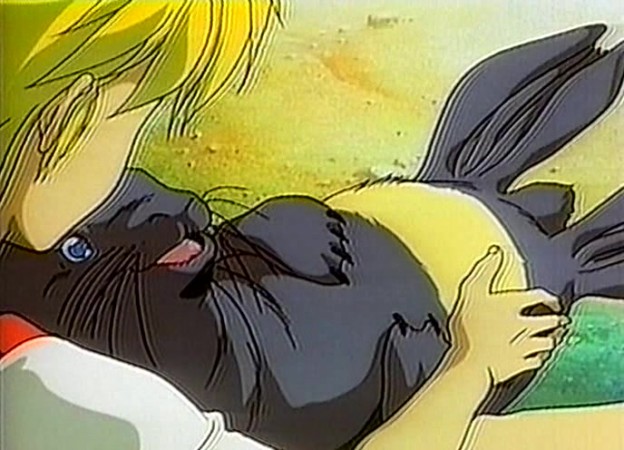
The film accurately follows the narration of the book: in the 1970s Antonio (Tottoi), a 14 year old kid, lives with his family in Germany. After his mother’s death, his father decides to go back to his native town in Sardinia to raise his two children in a healthier environment. So Tottoi and his little sister discover Dorgali and the maritime village Calagonone. During an exploration of the caves of Bue Marino, Tottoi finds a Mediterrean monk seal. This animal was believed to be extinct, but this specimen came back to the cave to give birth to a seal pup on a beach inside the cave. Accompanied by a local naturalist, Tottoi manages to befriend the seals, calling the newborn Zabaione (Eggnog) due to a yellow spot on the belly. Through the course of the film Tottoi and his friends defend the seals from an American business man that wants to capture them for his zoo in Florida.

A Mediterrean monk seal


The seal Zabaione in the film


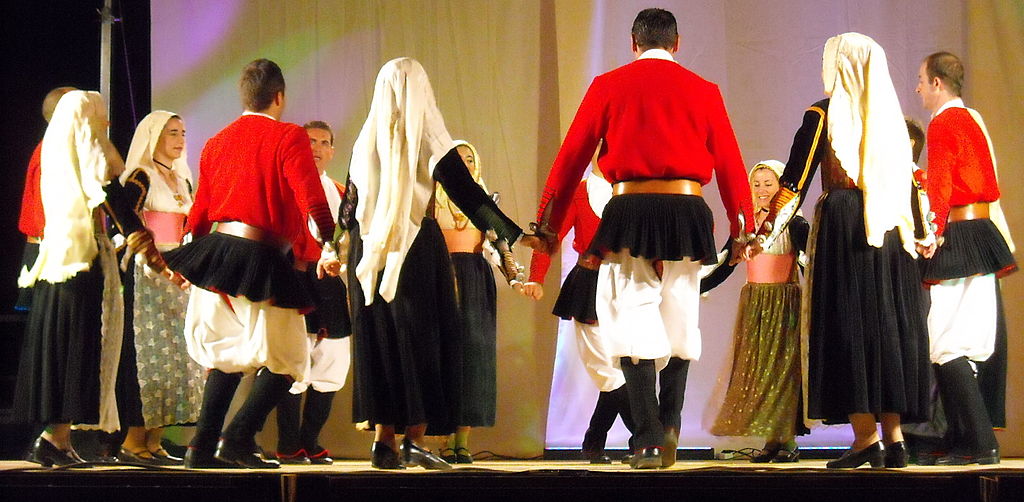
The film keeps the book’s message of protection and preservation of the environment, representing very accurately the Sardinian landscapes and traditions such as su ballu tundu, a traditional dance that has numerous variants of choreography according to the specific area of Sardinia, but they all have in common the fact of dancing in group in a circle. 

Picture of folk group Ittiri Caneddu shared by Cristiano Cani

The film was produced by Nippon Animation, the same studio that produced the World Masterpiece Theater mentioned earlier, and it aired in 1992 on the television channel NHK. The feature film was dubbed and aired in English and Spanish respectively with the titles The secret of the seal and El secreto de la foca. The film has been unknown in Italy until 2012, when the project of a class from the middle school of Dorgali provided an Italian dub. The students lent their voices and the result is a peculiar Italian version that includes expressions in Sardinian. The film was presented on March 17th 2012 at the municipal theater of Dorgali during the film festival Cinema Musica Ambiente Società organized by the municipality with the participation of the Department of Culture of Region Saridinia.

It’s a shame that an official dub doesn’t exist, but the project by Dorgali’s middle school is a very admirable initiative that finally allowed this film to be known in the country of origin of its story. 

Here is the full movie dubbed in English, enjoy!


viernes, 26 de febrero de 2021

Update: a trailer for Faulas!

So on Michela Atzeni's account I found a trailer for the short film we talked about earlier! It seems the title of the product changed from Faulas si credia to simply Faulas.


We can see the stop-motion animation uses characters created with paper puppets, with an aesthetic that resembles the illustrations of children’s books colored with markers. Personally I believed that this is a really good and charming effect.

In the credits, the names of the staff working with Michela Atzeni are different from the ones I previously presented, this is because that’s the final team for the short film. Michela Atzeni writes, directs and works on the animation, Giulia Pes takes care of the storyboard (which is planning the movements of the characters), while the character design is by Marina Brunetti.

The narrator’s voice will be Lia Careddu, with music by Simone Mura, photography of Federica Ortu and color grading by Damiano Picciau, under the organization of Laura Biagini and Mommotty’s executive production. One can speculate that the people previously involved in the team are working on another project for Mommotty.

Stay tuned for more news and trivias about the world of animation!

Novedades: ¡avance de Faulas!

¡Bueno, en la cuenta de Michela Atzeni encontré un pequeño avance del cortometraje del que hablamos anteriormente! Parece que el título de la producción cambió de Faulas si credia a simplemente Faulas


Podemos ver que la animación en stop-motion utiliza personajes creados con marionetas de papel, con una estética parecida a la de las ilustraciones en cuentos para niños coloradas con marcadores. Personalmente creo que es un efecto muy bonito y gracioso.

En los créditos, los nombres del equipo que colabora con Michela Atzeni son diferentes de los que presenté anteriormente, eso es porque este es el equipo definitivo para el cortometraje. Michela Atzeni escribe, dirige y trabaja en la animación, Giulia Pes se ocupa del storyboard (es decir la planificación del movimiento de los personajes), mientras que el character design (el diseño y la estética de los personajes) es de Marina Brunetti. 

La voz narradora será Lia Careddu, con las músicas de Simone Mura, con la fotografía de Federica Ortu y color grading de Damiano Picciau, bajo la organización de Laura Biagini y la producción ejecutiva de Mommotty. Es posible especular que las personas previamente implicadas en el equipo trabajan sobre otro proyecto para Mommotty

¡Hasta luego con más novedades y curiosidades sobre el mundo de la animación!

sábado, 6 de febrero de 2021

The Sardegna Film Commission short films - Fourth: anthropology, tradition and art

After “history, archaeology and legends of Sardinia”, “flora and fauna” and “distinguished Sardinian characters”, the fourth chapter of the miniseries that analyzes the Sardegna Film Commission animated short films features the theme of “anthropology, tradition and art”, represented by “Faulas si credia”.

Theme: anthropology, tradition and art

This short film is a collection of sayings of the popular tradition, of stereotypes and expressions contextualized through rhymes that explain their meaning, in the form of fables. 

Produced by Mommotty, the short film will be directed, written and animated by Michela Anedda, with the music of Emanuele Contis and the voice of Michela Atzeni. The animation technique will be one of my favorites, stop-motion. This type of animation consists in simulating the movement of static objects through a series of still images in succession. With this technique you can create animated movement of any object by taking sequential pictures. The possibilities are infinite: toys, articulated dolls, clay, sand, paper cutouts (as we saw in the case of the animated collage), and people as well! In the last case it’s a more specific technique called pixilation that uses the same principles with people instead of objects.

The stop-motion technique was also used for the special effects in famous films such as the first iteration of King Kong in 1933, the terrific effects of Beetlejuice (1988) and the formidable Gremlins in several scenes from the namesake features, alternating with the use of animatronic puppets. Famous examples of stop-motion animation are: films by company Aardman animations such as Wallace y Gromit, Chicken Run, Shaun the Sheep Movie; Coraline, Kubo and the Two Strings and ParaNorman by Studio Laika; and finally the Swiss-British series Pingu.

One of the most known examples of stop-motion in Italy is the series Mio and Mao by studio Misseri, charming product animated with claymation starring two curious kittens that explore their colorful world. The same studio produced in collaboration with NHK a series, Pozzie, animated using real droplets of water to create moving figures, with a new technique! Personally I believe that studio Misseri deserves an article on its own devoted to its products, it might happen in the future!

Mio and Mao from studio Misseri's page 

Pozzie from studio Misseri's page


Michela Anedda has a degree in Industrial Design at the University of Studies of Sassari and achieved a Master of Arts in animation at the Edinburgh College of Art with the production of short film Cogas: selected for numerous national and international film festivals, it won Best Italian Animation at Sardinia Film Festival. She participated in the university research project for the visual communication of Region Sardegna at Expo. As a freelancer she collaborates with Sardinian directors and directs animated short films: among them is “Sei tu il nostro eroe” for Sardegna Film Commission’s Heroes 20.20.20 project, selected at Brazilian festival Anim!Arte. Michela Anedda organizes stop-motion animation workshops as well for adults, young adults and kids.

Cogas from michela on Vimeo.

In several occasion her work was part of documentaries: in 2018 her stop-motion animation contributed to the narration of “L’Uomo con la Lanterna” directed by Francesca Lixi, that pieces together the life of her uncle as worker for the Italian Bank of China in the 1920s, thanks to pictures and recordings in 8mm film, and how discovering this past influenced the life of Francesca Lixi herself. 

What’s more, in 2019 she worked on the motion graphics of the short documentary “Ràixe - Spazi digitali per la cultura tabarchina”, produced by Ginko Film as multimedia content for the museum of Calasetta. The documentary narrates the fascinating history of the tabarchino people and their nomadic path through Mediterrean through the centuries.

Michela Atzeni is a theatre actress, performer and voice director. After her theatre training she studied acting at Teatro dei Filodrammatici of Milan and in 2014 she graduated at the School of Voice Acting at Centro O.D.S. of Turin, for which she did her first voice acting gigs. Since 2010 she has been collaborating with Sardegna Teatro in different theatre productions that tour at national level. She read numerous audiobooks for the platforms Storytel.it and Audible.com. She is chief of the company QUARANTACINQUE audiolibri e doppiaggio and is producer, reader and curator of audiobooks distributed nationwide and dubbing and voice over services. We can listen to her voice in an extract of the audiobook “Sentinella della pioggia” on Audible.com.

Emanuele Contis is a Sardinian musician and composer. After a short period as engineer, he discovered his real calling and studied further music, his passion, at Berklee College of Music in Valencia. A passion that he has since he played the saxophone at the age of 6, and that now is his job. He is the founder of INDÒRU - Boutique del suono, a creative studio for music and sound based in Sardinia: in INDÒRU he composes music for tv series, short films, advertisement, and the soundtrack for his first long film as well. You can listen to examples of his work on soundcloud and his personal website.

I adore stop-motion’s aesthetic, especially when clay is used, furthermore the saying and idioms fascinate me, because of this I believe it could become one of my favorite short films when it is released!

The next and last short film will be “La Rondine”, representing the theme of sustainability, climate change and quality of life, stay tuned!